
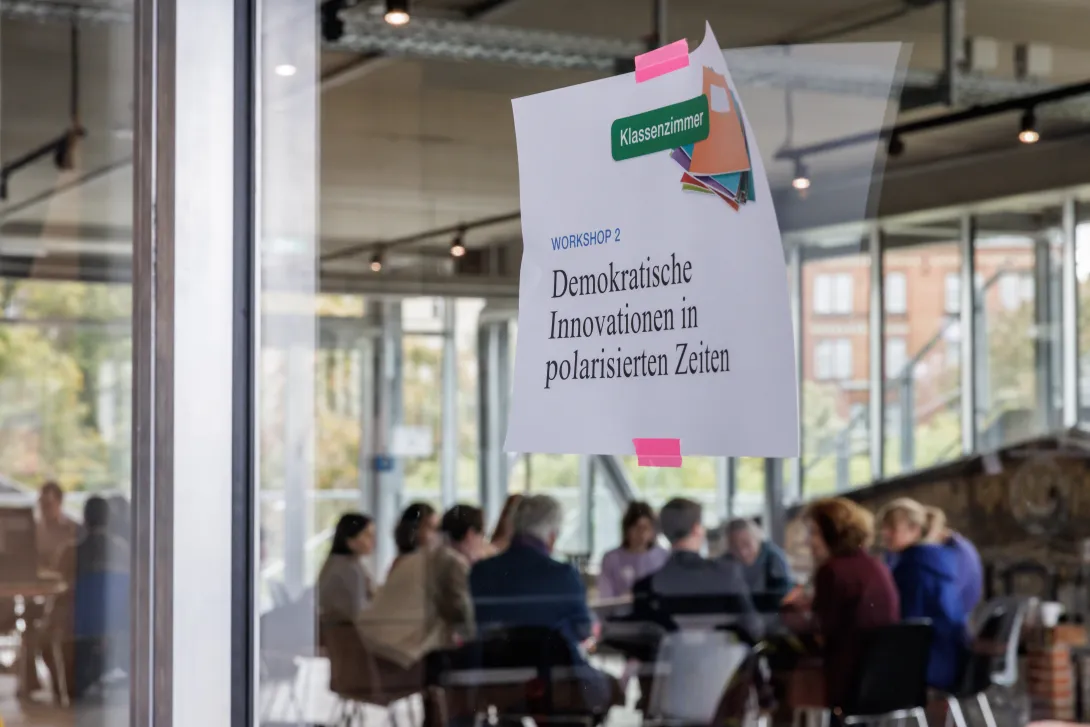
As part of the 40th anniversary conference of the Institute for Ecological Economy Research (IÖW) which took place in Berlin, Germany, on 09 October 2025 my colleague Esther Hoffman and I organised a workshop on the topic of ‘democratic innovation in polarised times’. The context of the workshop was our perception that the public debate on sustainability transitions in Germany is becoming increasingly polarised. This makes it difficult to negotiate shared societal goals and policy instruments to support a transition. The workshop explored how participation can be further developed under these societal conditions to make it more effective and inclusive. We also wanted to discuss which democratic innovations could potentially complement representative democracy as currently practiced in Germany.
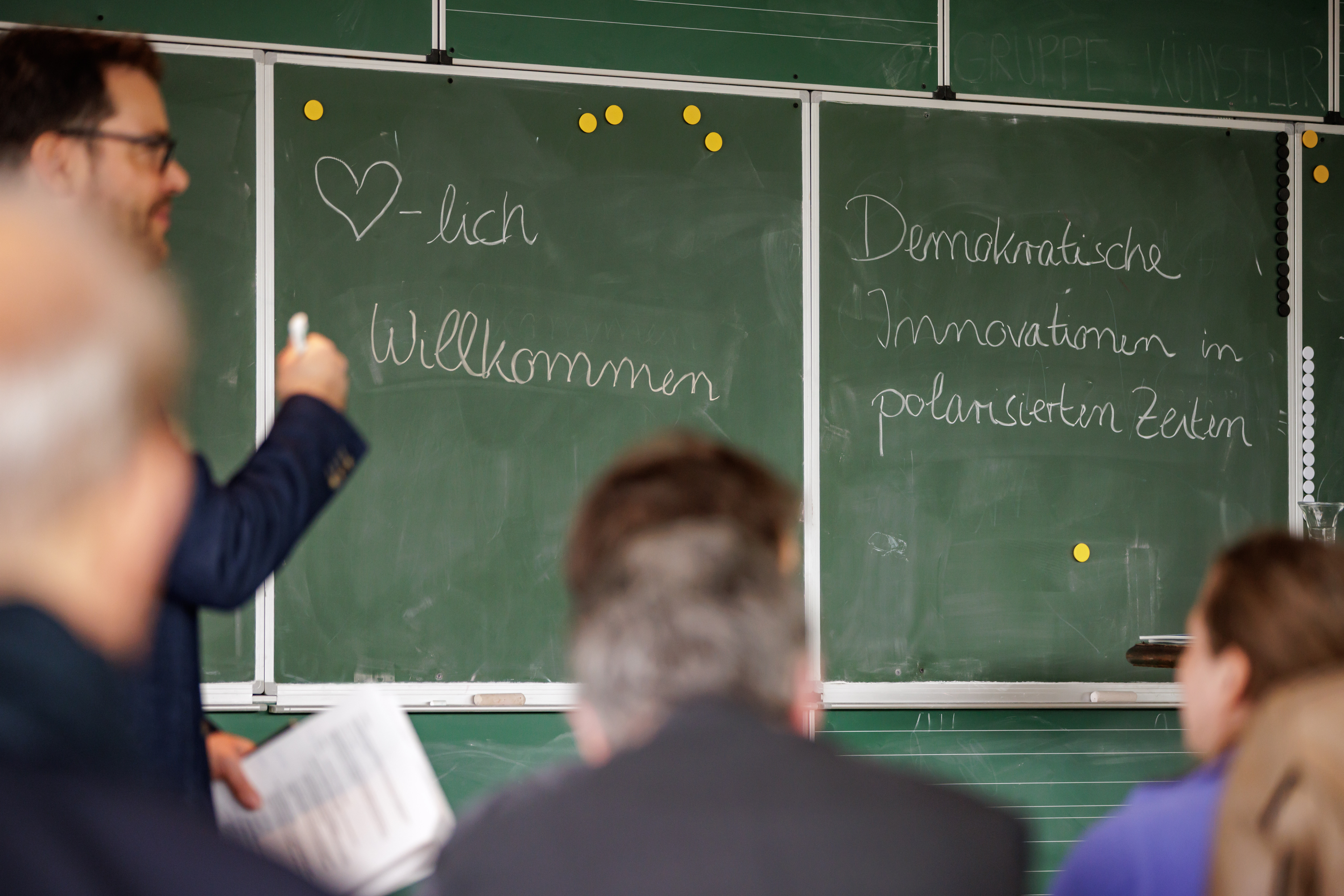
The workshop featured a brief introduction from Esther Hoffmann and myself about the starting point for the workshop which was the hypothesis that our current political climate in Germany is shaped by polarisation and loss of trust in the problem-solving capacity of the political system. There are a range of indications for this hypothesis, including the rise of right-wing populism and the electoral success of the extreme right party AfD, online disinformation campaigns, and an aggressive mobilisation against sustainability policy. At the same time, many young people who campaigned for stronger climate and environmental policies (Friday4Future, Last generation, etc) are disappointed with what has been achieved and in parts lost trust in the problem solving capacity of governments. In terms of polarisation, some data suggests that the polarisation especially between voters of other parties and voters of the AfD has risen significantly in recent years (Blattner and Voelkel 2023). Surveys also show that the satisfaction of how democracy in Germany is working decreased significantly between 2022 and 2024, albeit from a high level (Decker et al 2024). We argued that these tendencies undermine the societal negotiations around sustainability transitions.
The workshop features a range of participants from academia, civil society, relevant environmental institutions and some state-level policy makers. The workshop consisted of a series of inputs from academia and civil society organisations, including presentations from Esther Hoffmann, Jens Marquardt, Anne Kruse, Michael Kreß-Ludwig and Kira Sawicka, as well as plenary and small group discussions.`
In her summary of the wide-ranging discussions Kira Sawicka highlighted four points at the end of the workshop: First, meaningful participation processes require to get a formal mandate from politicians and bureaucrats as otherwise they are not effective. A useful strategy to convince these actors that participation is useful is to demonstrate its positive impact. Second, she raised the question about which topics are particularly suitable for such bottom-up participation processes? She argued that all topics tha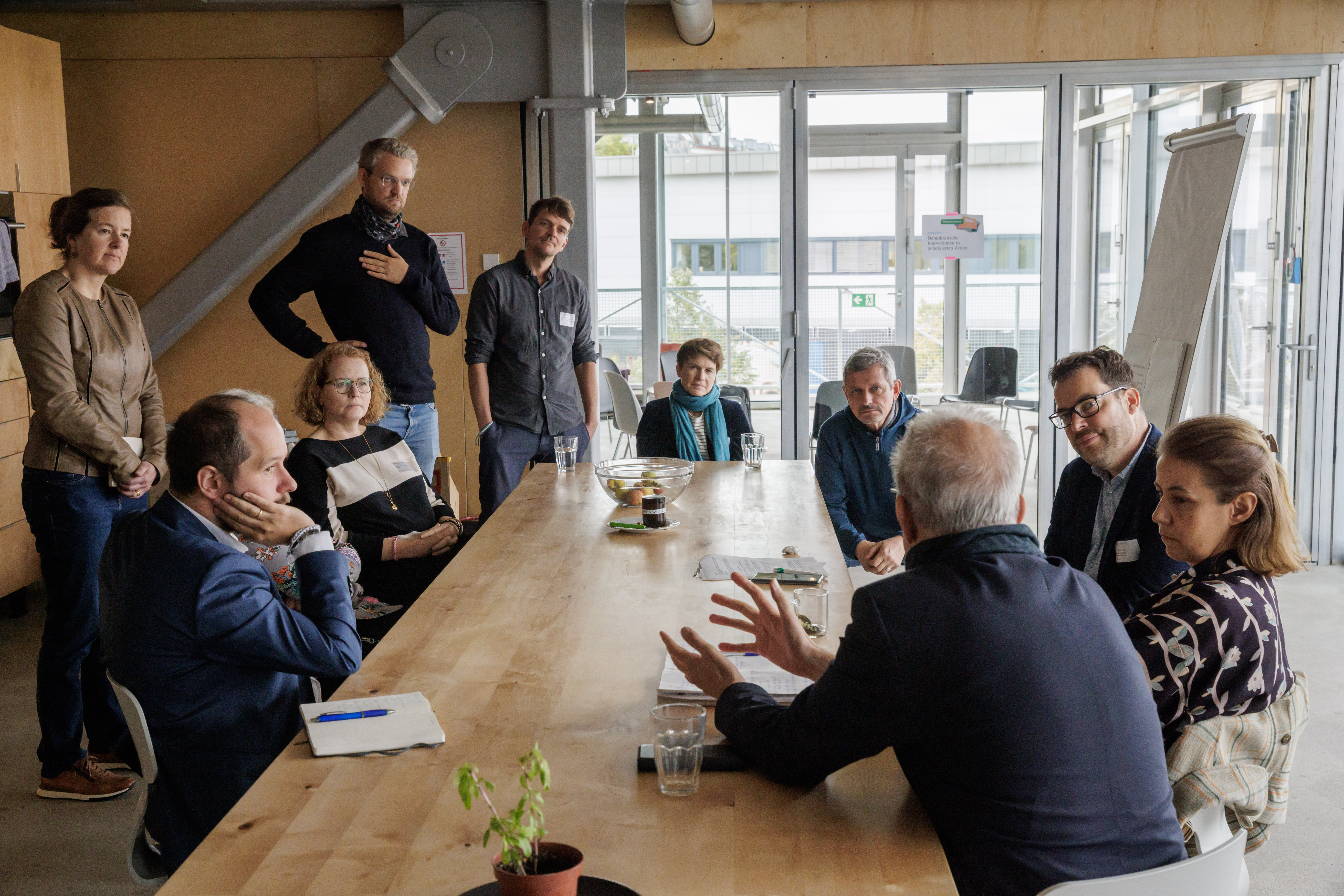 t directly affect people and topics where local authorities reach their limits and which, for example, go beyond their mandated tasks. Third, the funding of societal engagement and activism is an important pillar for fostering political participation and self-efficacy of citizens. Fourth, she highlighted positive examples of cooperation within existing spaces such as adult education centres, multi-generational houses, etc. Lastly, she emphasised that she sees it as encouraging that, despite the difficult societal circumstances, a range of great formats and methods have been developed for democratic innovations over the last few years.
Reflecting on these discussions at the workshop from a Trans4Demo perspective, many important insights emerged. These include that civil society organisations often create local meeting and engagement opportunities for citizens. Deliberative practices can work well on a local level if done properly, but that capacities for action is often limited at the local level, given the importance of federal level and state level policies and processes. Transdisciplinary research projects (living labs) can sometimes aid local political negotiation processes and researchers can act as mediators. Participation processes at the federal level are seen as much more difficult, are often seen as ineffective and are often accompanied by a limited political will to implement the results. Well-done participation is difficult to do, resource intensive and often does not address aims such as empowerment or increasing societal participation by less represented groups. There was also an animated discussion about whether democratic innovations are needed at all, or whether the use of direct democratic practices would be helpful in overcoming polarisation and negotiating societal majorities. These initial insights will inform our further case study work as well as our to be developed policy recommendations.
Photos: © Gordon Welters, www.gordonwelters.com