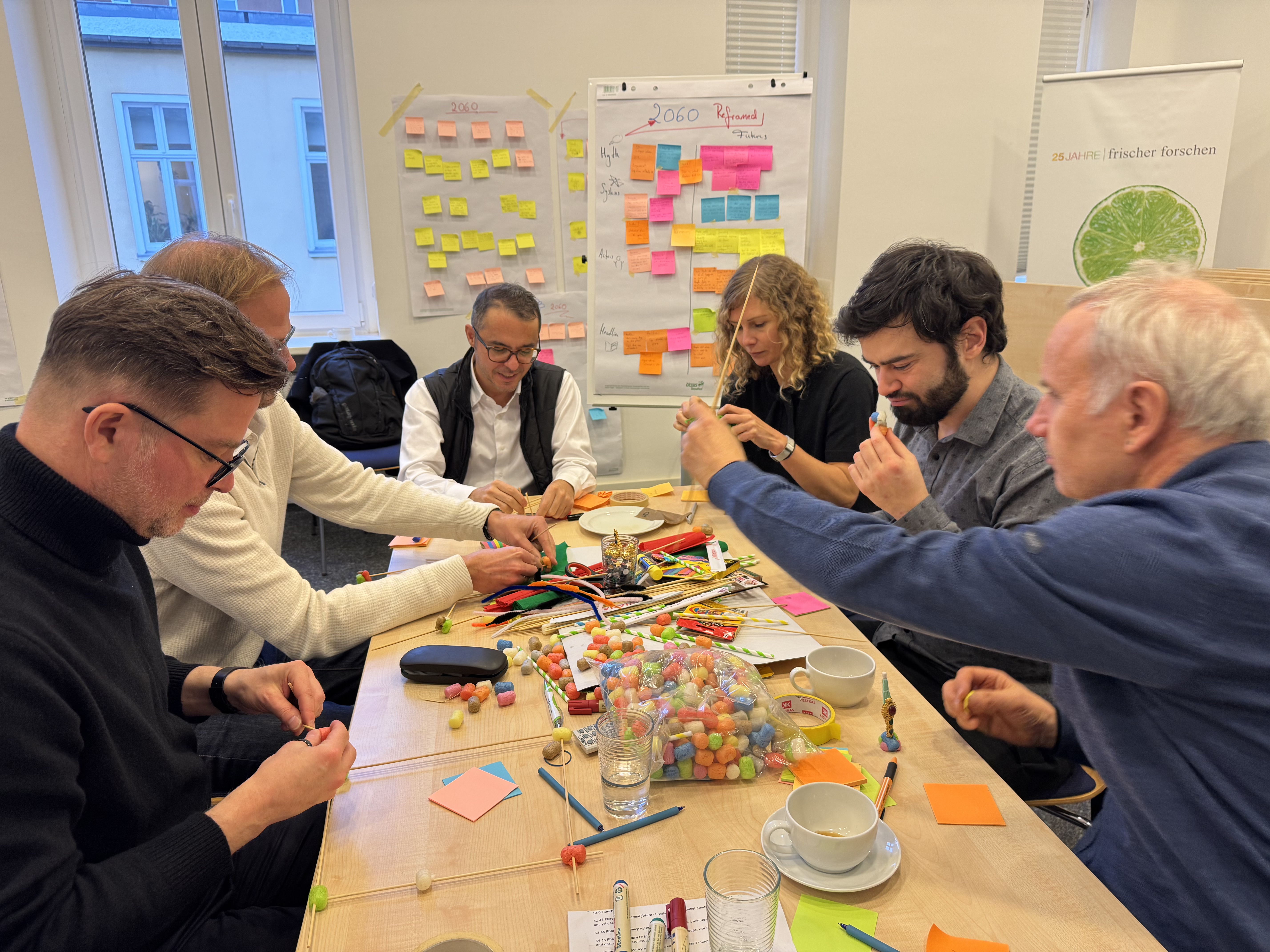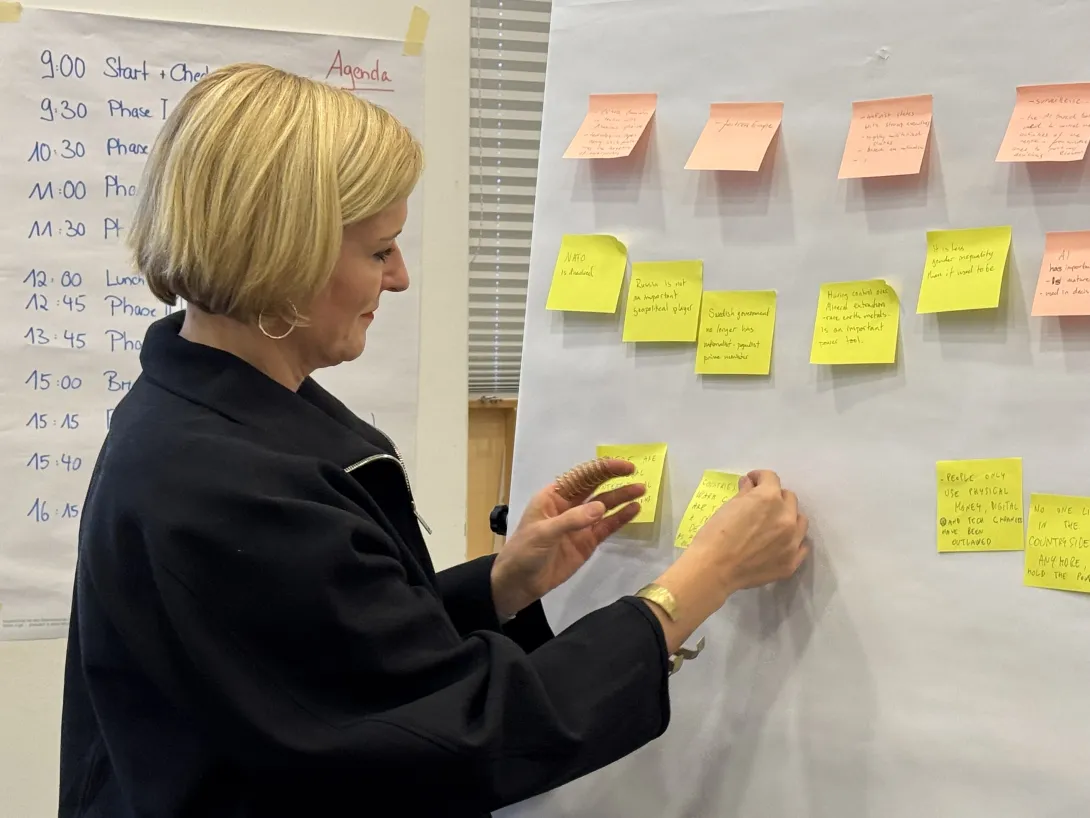
In a context marked by accelerating climate crises, technological disruption, and increasing strain on democratic institutions, imagining the future has become a political act in itself. The question is no longer only what future we are heading towards, but how we use ideas about the future to shape decisions, power relations, and democratic practices today.
This challenge lies at the heart of Trans4Demo, a Horizon Europe project exploring how democracy evolves under conditions of sustainability transitions. One of the project’s key methodological pillars for engaging with this complexity is the use of Futures Literacy Laboratories (FLLs).
Futures as a “novel site” for democracy
Rather than treating the future as something to be predicted or forecasted, Futures Literacy approaches it as a space for learning. Futures Literacy Laboratories are participatory and experiential environments in which people collectively explore how they imagine the future, and crucially why they imagine it in certain ways.
By surfacing the often invisible assumptions, expectations, and narratives that underpin our thinking about what lies ahead, FLLs help participants understand how images of the future actively shape present-day choices, institutional designs, and power dynamics. In this sense, the future becomes a novel site for examining democracy: a place where entrenched ideas can be questioned and new possibilities can emerge.
For Trans4Demo, this shift is fundamental. The project is not only interested in mapping democratic change, but in understanding how democratic agency, participation, and legitimacy can be reimagined in times of profound transition.
From prediction to sense-making
One of the distinguishing features of Futures Literacy Laboratories is their move away from prediction-based approaches. Instead of asking participants to define the “most likely” or “most desirable” future, FLLs focus on sense-making: how different ways of thinking about the future open or close possibilities in the present.
This approach enables participants to recognise how dominant future narratives, such as technological inevitability or crisis-driven emergency governance, can constrain democratic imagination. By temporarily suspending these defaults, FLLs create space for alternative interpretations of power, governance, and collective action to take shape.
Experiencing Futures Literacy in Berlin
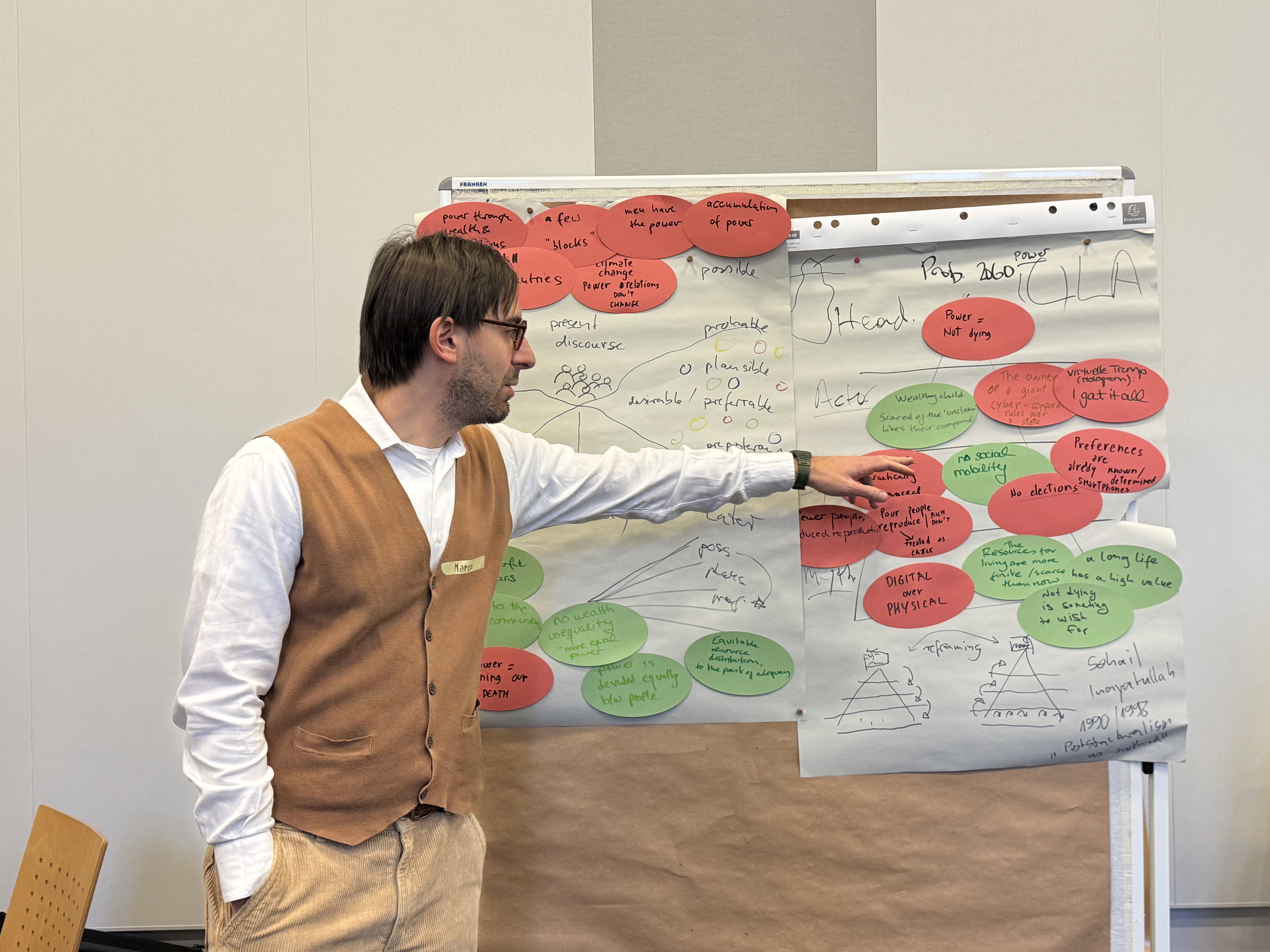
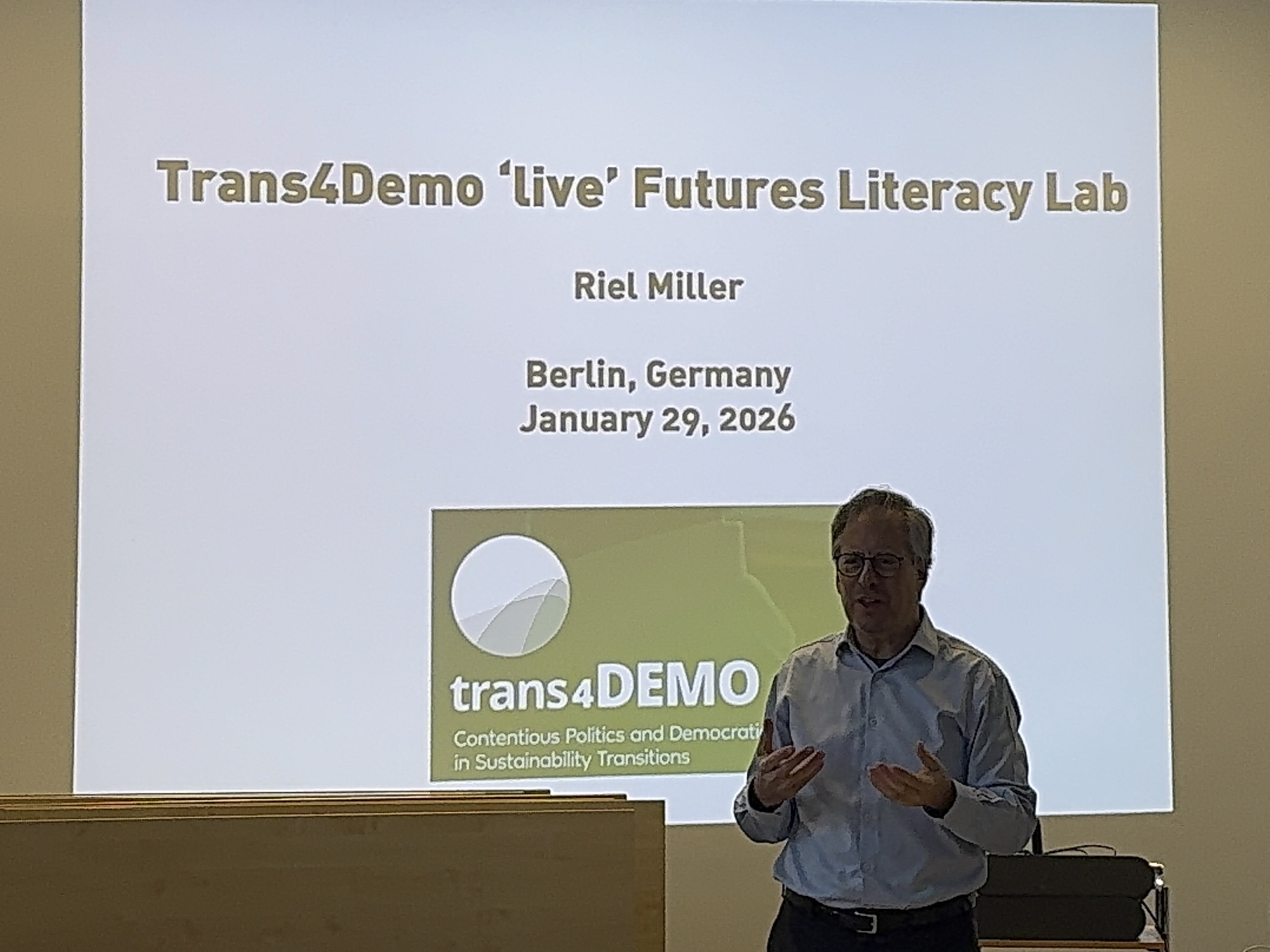
This learning-by-doing approach was put into practice during a Futures Literacy Laboratory held in Berlin on 29 January 2026, where Trans4Demo partners became FLL participants themselves. The laboratory focused on imagining the future of power, inviting participants to critically explore how power might be exercised, distributed, or transformed in democratic systems under conditions of sustainability transition.
The session was facilitated by Riel Miller, Professor at NIFU – Nordic Institute for Studies in Innovation, Research and Education, together with a group of volunteer facilitators, including Caroline V. Rudzinski, Charlotte Heidsiek, Ludwig Weh, and Makēda Gershenson. Through a structured, co-creative process, participants engaged in collective reflection, challenged implicit assumptions, and experimented with new ways of framing democratic futures.
Rather than producing a single shared vision, the laboratory enabled participants to experience how futures thinking can expand democratic agency by making room for uncertainty, plurality, and learning.
Scaling Futures Literacy across Trans4Demo
Following their experience in Berlin, Trans4Demo partners will now carry this methodology forward by organising Futures Literacy Laboratories in their own national contexts. This next phase is not about replication in a mechanical sense, but about adapting the FLL approach to diverse democratic, institutional, and cultural settings.
By doing so, Trans4Demo aims to:
- strengthen collective capacities to think beyond inherited democratic models,
- foster inclusive dialogue on power and participation,
- and support more adaptable, reflexive democratic practices across Europe.
Why FLLs matter for democratic transformation
Futures Literacy Laboratories matter for democratic transformation because they address a core, and often overlooked, challenge of democracy in times of profound change: the inability of existing democratic frameworks to think beyond their own historical assumptions.
Democratic institutions and practices are largely built on past experiences; industrial growth, stable social contracts, and relatively predictable political cycles. In the context of sustainability transitions, however, these assumptions are increasingly strained. Climate urgency, technological acceleration, and growing social inequalities demand forms of governance that can operate under uncertainty, ambiguity, and plurality. FLLs respond to this challenge by strengthening a key democratic capacity: the ability to learn from the future.
By making anticipatory assumptions explicit, FLLs enable participants to recognise how dominant future narratives shape present-day power relations. For example, imaginaries centred on crisis, scarcity, or technological inevitability often justify top-down decision-making and the narrowing of democratic debate. Futures Literacy Laboratories allow participants to critically examine these narratives, opening space for alternative understandings of authority, responsibility, and collective agency.
Importantly, FLLs do not aim to replace existing democratic institutions or prescribe ideal future models. Instead, they work at a more fundamental level: how people relate to uncertainty and change. Through collective reflection and experimentation, participants learn to treat uncertainty not as a threat to be controlled, but as a resource for democratic innovation. This shift is essential for rethinking participation, representation, and legitimacy in complex governance settings.
For Trans4Demo, this makes FLLs a powerful tool for democratic renewal. They create inclusive spaces where diverse actors can engage on equal footing, temporarily suspending entrenched roles and hierarchies. In doing so, FLLs foster mutual learning and help rebuild trust in democratic processes by emphasising openness, reflexivity, and shared responsibility.
Ultimately, Futures Literacy Laboratories matter because they expand the democratic imagination. Rather than asking participants to agree on a single vision of the future, they enable societies to hold multiple futures at once and to consciously choose how these futures are used in the present. In an era defined by transformation rather than stability, this capacity may be one of the most vital foundations for resilient, inclusive, and adaptive democratic systems